
Fiberglass vs Concrete Pools
Fiberglass vs. Concrete Pools
Both can create an excellent backyard. The better choice depends on design freedom, schedule, maintenance, access and the way you plan to use the pool.
Quick comparison
| Decision point | Fiberglass | Concrete |
|---|---|---|
| Shape and size | Selected from manufactured models | Highly customizable on site |
| Surface | Smooth, nonporous gel-coat finish | Plaster or other site-applied finish |
| On-site construction | Often shorter after permits and preparation | Typically longer and more weather-dependent |
| Routine surface care | Generally simpler and less algae-prone | Porous surfaces may require more brushing and chemistry attention |
| Future surface work | Depends on shell and finish condition | Periodic resurfacing is a normal ownership consideration |
| Access | Whole shell must reach the excavation | Materials are formed and placed on site |
| Best fit | Homeowners who value speed, smooth finish and defined models | Homeowners who need a highly custom shape, depth or architectural detail |
Why choose fiberglass?
- Smooth surface that is comfortable underfoot
- Integrated steps, benches and ledges on many models
- Factory-controlled shell construction
- Potentially shorter on-site build sequence
- Lower routine surface maintenance for many owners
The main limitations are fixed model dimensions and the need to deliver the full shell to the backyard.
Why choose concrete?
- Custom shape, depth and edge geometry
- Flexible integration with highly architectural yards
- Wide range of interior and coping finishes
- Useful when a manufactured shell cannot meet the design
- Built in place rather than delivered as one piece
The tradeoffs often include a longer build, a rougher or more porous finish and more long-term surface maintenance.
Which is better for Hampton Roads?
Fiberglass is often compelling for homeowners who want a smooth pool, a defined selection process and less time with an open construction site. Concrete is often worth considering when the pool must follow a custom footprint, reach an unusual depth or carry a specific architectural design.
Local site conditions do not disappear with either choice. Groundwater, drainage, permits, electrical work, safety barriers and the surrounding deck still need careful planning.
Three questions that usually decide it
Do you need a custom shape?
If the answer is yes, concrete deserves serious consideration.
Can a shell reach the yard?
If access is limited, the delivery plan may decide whether fiberglass is practical.
How much maintenance do you want?
Fiberglass appeals to owners who prioritize a smooth, lower-maintenance surface.
Factory-built shells do not have to look one-size-fits-all
Fiberglass models come in defined shapes, but the finished backyard can still be highly personal. Coping, patios, landscaping, spas, water features and gathering areas shape the final result.


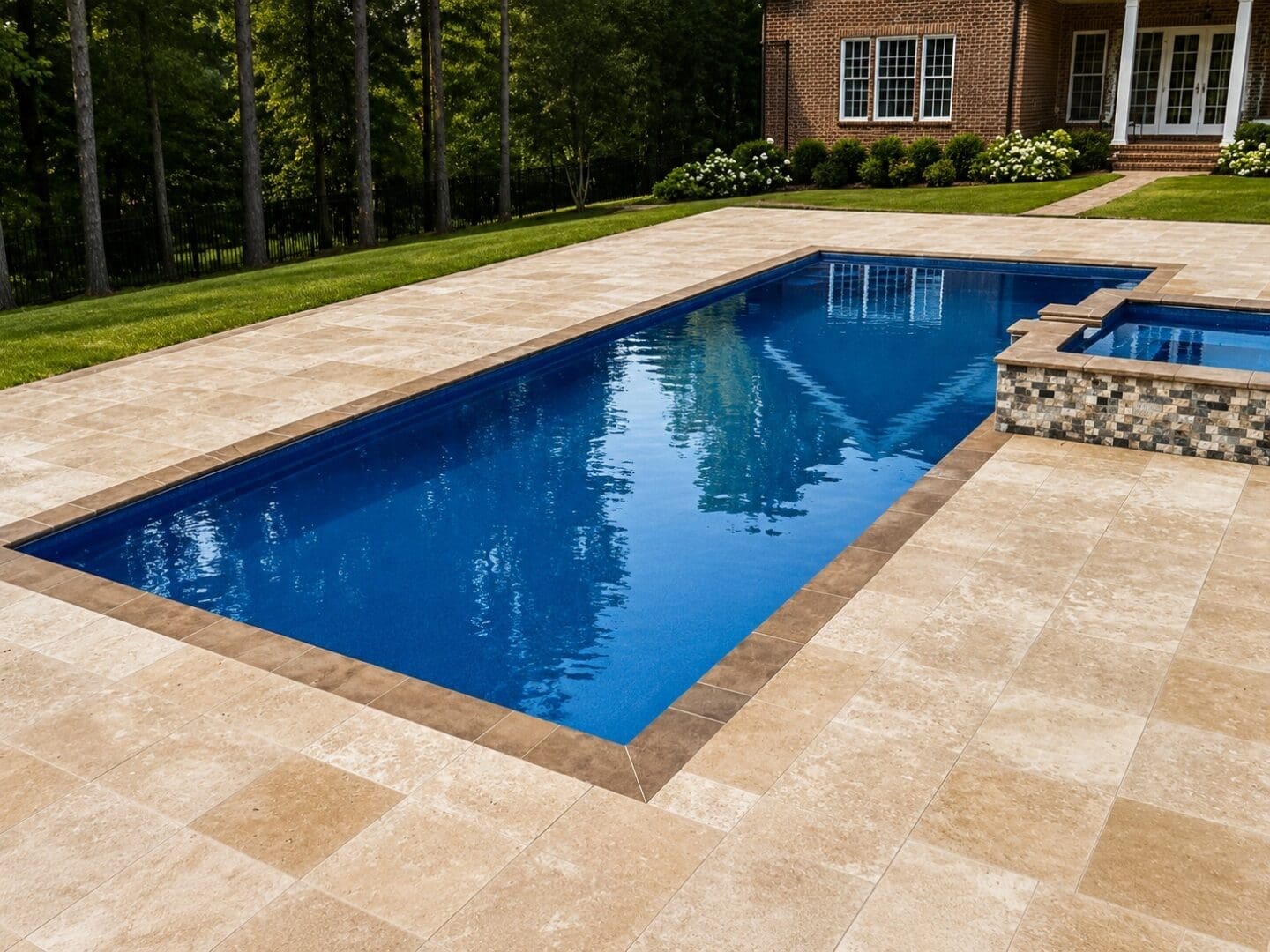
Selected completed pool projects from the B&B team.
Fiberglass and concrete pool FAQs
Are fiberglass pools cheaper than concrete?
They can be, but complete project cost depends on size, access, equipment, deck area and finish choices. Compare proposals with the same inclusions rather than comparing advertised starting prices.
Do fiberglass pools crack?
Any pool can be damaged by poor installation, soil movement or improper water management. Manufacturer-approved base, backfill and groundwater practices are essential.
How long do fiberglass pools last?
A quality shell installed and maintained correctly is intended for long service. The specific structural and surface warranty depends on the manufacturer and model selected.
Which pool installs faster?
Fiberglass usually has a shorter on-site shell installation sequence because the pool arrives manufactured. Total project time still includes design, permitting, excavation, utilities, inspections and the surrounding deck.
Let the property point to the right answer
B&B Decks and Pools can help you evaluate whether a fiberglass pool fits your yard, goals and budget.