
Covered Deck Ideas for Hampton Roads
Certified Trex & TimberTech installer · Virginia Class A Licensed Contractor · BBB A+ accredited. Custom decks built for coastal Virginia.
B&B Decks quick answers
Turn covered-deck ideas into a permit-ready scope
Covered deck projects need planning around structure, roof tie-ins, posts, drainage, materials, screens, lighting, and permit requirements.
- What B&B Decks does
- B&B Decks builds and repairs decks, composite decks, Trex decks, stairs, railings, screened-porch tie-ins, and outdoor-living projects in Hampton Roads.
- Where B&B Decks serves
- B&B Decks serves Hampton Roads and Coastal Virginia, including Virginia Beach, Chesapeake, Norfolk, Suffolk, Portsmouth, Hampton, Newport News, Williamsburg, Yorktown, Poquoson, and nearby communities.
- Materials installed
- Projects may include Trex, TimberTech, capped composite, PVC, pressure-treated wood when appropriate, coastal-rated fasteners, railing systems, fascia, lighting, flashing, and drainage details.
- What affects price
- Cost changes with size, height, material tier, railing, stairs, demolition, framing condition, ledger work, drainage, access, and permitting.
- Repair or replace
- Repair can make sense for isolated issues on a sound structure. Replacement is better when framing, ledger, stairs, railings, rot, moisture, or repeated repairs create bigger safety or cost concerns.
- Next step
- Use the related service links below to move from research to a site-specific estimate or inspection.
Custom deck builder | Screened porch cost | Deck price estimator
In coastal Virginia, a roof over your deck can be the difference between a space you use a few weekends a year and one you live in all season long. Summer sun is intense, afternoon thunderstorms roll in fast, and the humidity makes shade feel essential. A well-designed cover keeps you comfortable through it all while protecting your furniture, your decking, and your investment.
If you are gathering covered deck ideas for a home in Virginia Beach, Chesapeake, Norfolk, Suffolk, Portsmouth, Hampton, Newport News, or Williamsburg, this guide covers the roof styles worth considering, the choice between partial and full coverage, what to do with the space under an elevated deck, and the features that make a covered deck feel like a true outdoor room. B&B Decks designs and builds covered decks across Hampton Roads, and we have learned what holds up in our climate.
Roof Styles for Covered Decks
In Virginia Beach specifically? See our screened porch builder in Virginia Beach page.
Want full weather protection? Compare a screened porch or add EZE-Breeze porch windows to enclose your covered deck year-round.
The roof structure sets the entire character of the space. Here are the most popular covered deck designs and what each one does best.
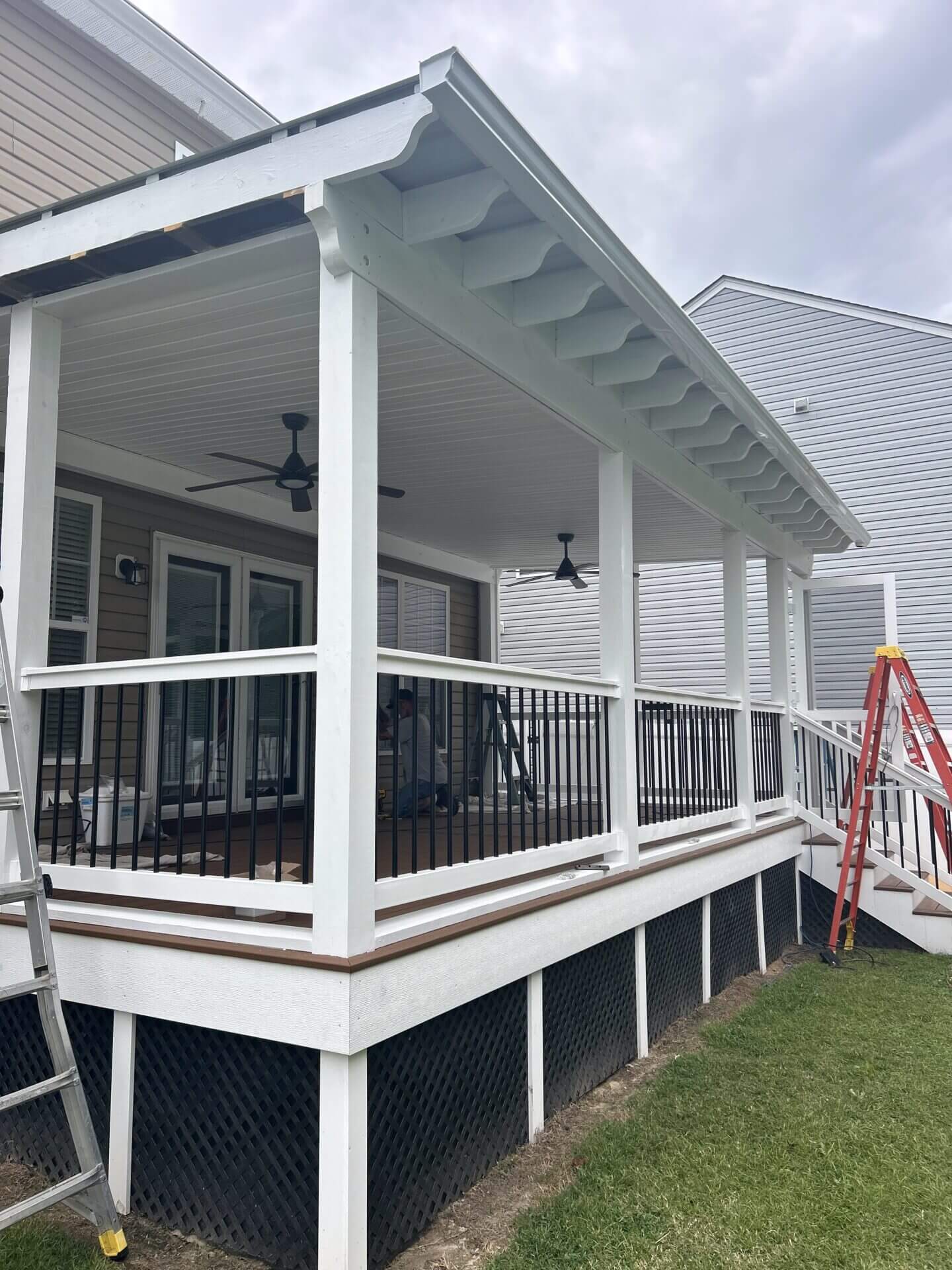
- Gable roof. A peaked, open-gable roof gives the deck height, drama, and excellent airflow. Vaulting the ceiling and adding exposed beams creates an airy, finished room that pairs beautifully with a ceiling fan.
- Shed roof. A single-slope shed roof is clean, modern, and budget-friendly. It ties neatly into the side of the house and sheds rain efficiently, which matters during our heavy coastal downpours.
- Pergola cover. A pergola offers partial shade with an open, architectural feel. Pair it with a retractable canopy, polycarbonate panels, or climbing plants when you want more protection without fully closing in the space.
- Louvered roof. An adjustable louvered roof is the most flexible option. Open the slats for sun and breeze, then close them at the first sign of rain. It is a premium choice that delivers true year-round control.
Among decks with roof ideas, the right pick usually comes down to how much sun and rain protection you want, your budget, and how the roofline relates to your existing home. We help homeowners weigh those trade-offs during design.
Partial vs. Full Coverage
You do not have to cover the entire deck. In fact, some of the most livable layouts mix covered and open zones.
Partially Covered Deck Ideas
A partial cover lets you have it both ways. Roof the dining or lounge area near the house, and leave the far end open for sun-seekers, a grill station, or a hot tub under the sky. Partially covered deck ideas are especially smart in Hampton Roads because you can chase the shade in July and still soak up sun in the cooler months. A pergola over one section paired with a solid roof over another gives you distinct zones with different moods.
Full Coverage
A fully covered deck becomes a genuine outdoor room, usable in rain or shine. It protects furniture from constant sun and weather, keeps the surface dry, and is the natural starting point if you ever want to add screens, an outdoor kitchen, or a TV. If protection from our frequent storms and harsh UV is your priority, full coverage delivers the most.
Under-Deck Covering Ideas
If your deck is elevated, the space underneath is valuable real estate. Capturing it is one of the smartest deck covering ideas available, and it works whether or not the deck above is roofed.
- Under-deck drainage systems. Installed between the joists, these systems channel rainwater away and create a dry ceiling below, turning the underside of an upper deck into a usable, weather-protected patio.
- Finished ceilings. A finished under-deck ceiling hides the framing and gives the lower space a clean, room-like feel ready for lighting and fans.
- Lower-level living. With the space kept dry, the area below becomes a shaded lounge, dining spot, or even an outdoor TV nook protected from the elements.
These under deck covering ideas essentially double the footprint of a two-story deck without expanding the structure’s footprint at all.
Materials That Last in Coastal Virginia
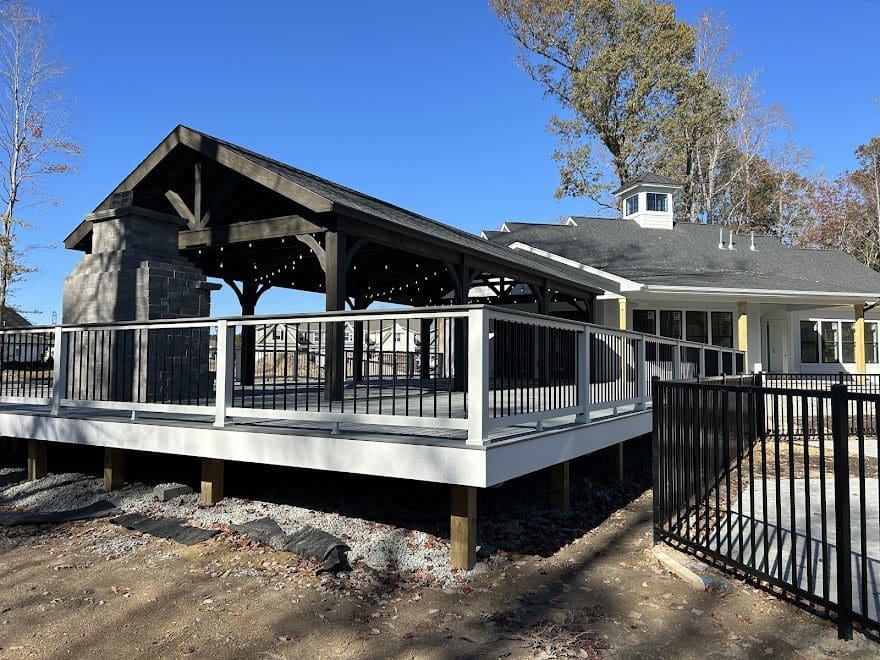
Salt air, humidity, and strong UV are hard on outdoor structures. Choosing the right materials keeps a covered deck looking good with minimal upkeep.
- Composite decking. As a certified Trex and TimberTech installer, we build deck surfaces that resist moisture, mold, fading, and rot, no annual sealing required.
- Durable roofing. Metal and architectural shingle roofs both stand up well to coastal storms; the choice often follows the look of your home.
- Corrosion-resistant hardware. Stainless and coated fasteners rated for coastal conditions prevent the rust streaks and weakened connections that cheap hardware causes near the water.
- Treated and engineered framing. Properly rated structural lumber and connectors keep the roof and deck sound through decades of weather.
Features That Make a Covered Deck Better
A roof is just the beginning. These additions turn a covered deck into a space you will use every day.
- Ceiling fans. Airflow is everything in Virginia summers. A damp-rated fan keeps the space comfortable and helps deter mosquitoes.
- Lighting. Recessed ceiling lights, pendant fixtures over a dining table, and dimmable LEDs let the deck transition smoothly into evening.
- Screens. Adding screens converts a covered deck into a screened porch, keeping out the mosquitoes and gnats that come with coastal living. Retractable screens let you open up when the bugs are gone.
- Outdoor kitchen. A covered roof protects appliances and lets you grill and entertain regardless of the forecast.
Frequently Asked Questions
What is the best roof for a covered deck in Hampton Roads?
It depends on your goals. Gable roofs offer height and airflow, shed roofs are clean and economical, pergolas give partial shade, and louvered roofs provide adjustable control. We help you match the style to your home and our coastal weather during a design consultation.
Can I cover only part of my deck?
Absolutely. Partially covered decks are popular because they let you create a shaded, weather-protected zone while keeping an open area for sun, a grill, or a hot tub. It is one of the most flexible layouts for our climate.
What can I do with the space under an elevated deck?
An under-deck drainage system and finished ceiling keep the lower area dry, turning it into a usable shaded patio, lounge, or dining space. It is an excellent way to gain living space without enlarging the structure’s footprint.
Do covered decks require a permit in Virginia?
Yes, adding a roof structure to a deck generally requires permits and must meet structural and wind-load codes. As a Virginia Class A licensed contractor, B&B Decks handles permitting and builds everything to code.
Can a covered deck be turned into a screened porch later?
Yes. A covered deck is the natural foundation for a screened porch. If you think you may want screens down the road, we can design the cover so screens can be added cleanly when you are ready.
Let’s Plan Your Covered Deck
A covered deck is one of the most rewarding upgrades you can make to a Hampton Roads home, giving you shade in the heat, shelter in the rain, and a comfortable outdoor room for most of the year. B&B Decks designs and builds covered decks, screened porches, and pergolas with materials chosen for coastal Virginia. Reach out for a free design consultation and we will help you turn your favorite ideas into a space you will actually use.
Ready for Your New Outdoor Space?
Get a free, no-pressure quote from B&B Decks. We respond same day and bring real material samples to your home.
Get a Free Estimate Call (757) 676-0863Planning a bigger covered backyard space?
Pool houses and pavilions for Hampton Roads homes
If the project needs shade, storage, seating, or a permanent structure near the pool, review our pool house and pavilion planning page.
View pool houses and pavilions