
5 Decking Options for Coastal Virginia: Heat, Moisture, and Maintenance
Certified Trex & TimberTech installer · Virginia Class A Licensed Contractor · BBB A+ accredited. Custom decks built for coastal Virginia.
For coastal-ready installation, explore our Trex decking Virginia Beach services.
Ask ten people what the best composite decking is and you’ll get ten answers, because “best” depends entirely on where the deck lives. In the Hampton Roads region, a deck has to survive salt air, relentless summer humidity, and intense UV that fades and overheats lesser boards. The composite that tops a magazine roundup written for a dry inland climate may not be the right choice three blocks from the Chesapeake Bay.
As a certified Trex and TimberTech installer and a Virginia Class A licensed contractor building decks across coastal Virginia, B&B Decks has watched how different materials actually age in this climate. Here’s a straightforward, expert look at what makes composite decking the best choice near the water, and how the leading brands compare.
When you are ready to move from choosing materials to building the deck, see how we design and install composite decks on our composite deck builder in Hampton Roads page.
What Makes Decking “Best” for Salt Air, Humidity, and UV
Prefer TimberTech? We are also a certified TimberTech deck installer in Virginia Beach.
Compare four things before choosing decking for a coastal home:
- Moisture resistance. Review the exact product’s composition and permitted exposure conditions. Moisture-resistant boards still need a suitable frame, drainage, and installation plan.
- Fade and stain protection. Compare the current limited warranty and care instructions for the line being quoted, including exclusions and installation requirements.
- Surface cleaning. A low-maintenance board still needs debris removal and cleaning. Surface mold and mildew can require attention even on moisture-resistant decking.
- Heat underfoot. Compare the actual color and any product-specific heat-mitigating technology alongside sun exposure and shade. All decking can get hot in direct sun.
Capped vs. Uncapped Composite: Why It Matters on the Coast
Capping is one part of a decking specification. The core material, cap coverage, exact product line, site conditions, and manufacturer instructions should be considered together.
Uncapped Composite
Uncapped wood-fiber composite has no protective shell over its core. When assessing an older deck, identify the product and its condition before deciding whether cleaning, repairs, or replacement make sense. Follow care guidance for that particular material.
Capped Composite
A protective polymer cap can improve resistance to staining, fading, and moisture. Its coverage and the underlying core vary by product. Confirm the current specifications rather than assuming every board from one brand has the same cap configuration or performance. Advanced PVC and mineral-based composite also use different core materials from wood-fiber composite.
Explore our installed offerings: Trex composite decking, TimberTech decking, and advanced PVC decking for Hampton Roads homes.
Fade, Stain, and Mold Resistance
Fade and stain protection depends on the exact product’s current limited warranty, exclusions, care requirements, and installation conditions. A warranty duration is not a promise that every deck will look unchanged for that period. Keep debris from collecting, allow the deck to drain and dry, and follow the manufacturer’s cleaning guidance. A protective cap does not eliminate the need to address surface mold or mildew.
Heat and Color Choices for the Sun
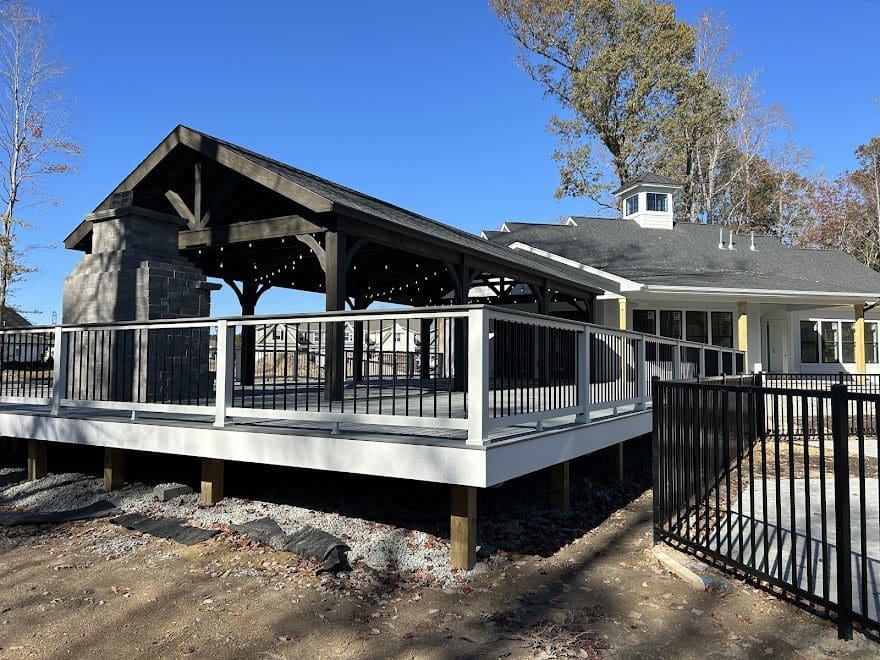
All decking gets warm in direct sun, and darker colors get warmer. For a deck with significant sun exposure, we often steer homeowners toward mid and lighter tones and toward product lines marketed with heat-reducing technology. You don’t have to give up the rich, modern look you want, but it’s worth talking through color and sun orientation before you commit. We cover this during design.
Substructure Considerations Near the Water
Here’s what most “best decking” articles miss: the boards are only half the story. Near the water, the framing and hardware determine whether your deck lasts.
- Corrosion-resistant fasteners and connectors. Salt destroys cheap hardware. We use stainless or heavily coated, coastal-rated fasteners and joist hangers.
- Protected framing. Joist tape and proper flashing help limit moisture entry at vulnerable framing details.
- Ventilation and clearance. Airflow under the deck lets the substructure dry, which is critical in our humidity.
- Code-compliant connections. Waterfront and elevated decks may face stricter structural requirements, which we engineer for from the start.
The best composite deck boards on the planet won’t save a deck framed with the wrong hardware in a salt environment. This is why professional, coastal-experienced installation matters as much as material choice.
Maintenance: What to Expect

Composite and PVC decking can reduce the recurring sanding, staining, and sealing associated with wood surfaces. Cleaning is still necessary: follow the exact manufacturer instructions for the board, including approved cleaners and methods. Remove debris and review the framing, drainage, and hardware as part of deck maintenance. The right maintenance plan depends on the material and the site.
Our Professional Recommendation
Start with the exact product and color, site moisture, sun exposure, maintenance preferences, and installation requirements. Compare current specifications and samples, then choose a board alongside the framing, fasteners, drainage, and shade plan. B&B helps homeowners compare composite, PVC, mineral-based composite, and wood options against their site conditions and written project scope during a free consultation.
Frequently Asked Questions
What is the best composite decking for a coastal climate?
There is no single product that suits every coastal home. The right choice depends on the exact board and color, sun exposure, moisture conditions, maintenance preferences, and installation requirements. Compare current manufacturer specifications and samples alongside the complete deck scope.
Is composite or PVC decking better near the ocean?
Both can be suitable when the specific product and installation meet the site conditions. TimberTech Advanced PVC contains no wood fibers, while wood-fiber and mineral-based composites have different core materials. Review the exact board specifications, cleaning requirements, framing, and fasteners rather than choosing on the material name alone.
Does composite decking fade in the sun?
Fade resistance and permitted color change vary by product. Review the selected line’s current limited fade and stain warranty, exclusions, and care instructions. Warranty duration alone does not establish how a particular deck will look after years of exposure.
How much does composite decking cost?
Installed cost depends on deck size, height, board line, railing, stairs, framing, access, drainage, and permit scope. Request a site-specific written estimate so the included work and any exclusions are clear.
Does composite decking get hot?
Yes. All decking can get hot in direct sun. Lighter colors and some product-specific heat-mitigating technologies can reduce surface warmth relative to the manufacturer’s comparison product, but they do not guarantee a cool surface or comfortable bare feet. Plan shade and compare the exact options.
Talk to a Coastal Decking Expert
Choosing the best composite decking for your home is easier with a builder who has seen how these materials age by the water. B&B Decks is a certified Trex and TimberTech installer and a Class A licensed, BBB A+ accredited contractor serving Hampton Roads. Contact us today for a free consultation and quote, and we’ll recommend the right product and build for your site.
Ready for Your New Outdoor Space?
Get a free, no-pressure quote from B&B Decks. We respond same day and bring real material samples to your home.
Building near the coast? B&B Decks is your local deck builder near me in Hampton Roads — serving Virginia Beach, Chesapeake, Norfolk, Suffolk, Williamsburg, and the Peninsula.