
Composite vs Wood Decking in Hampton Roads: The Truth
After 25 years building decks across Hampton Roads, I have torn out more rotted wood decks than I can count, and I have rebuilt plenty of composite ones that still looked new underneath the failure. So when a homeowner asks me whether composite or wood is the right call here, I do not give a sales pitch. I give them the truth, and the truth depends on where you live, how long you are staying, and how you want to spend your weekends. This page lays out the honest comparison for our coastal Virginia climate.
Quick Answers
Is composite decking better than wood?
For most Hampton Roads homeowners, yes. Composite resists the rot, warping, splintering and insect damage that our humidity and salt air drive in wood. It costs more up front, but it typically lasts 25 to 30+ years with almost no maintenance, while a wood deck here usually needs refinishing every year or two and replacement in 10 to 15 years. Wood still wins on lowest upfront price and a natural look some homeowners prefer.
How long does a composite deck last compared to wood?
A quality composite deck (Trex, TimberTech, Wolf) lasts about 25 to 30 years or more, and most carry 25-year or limited lifetime material warranties. Pressure-treated wood in our coastal climate generally lasts 10 to 15 years before boards need replacing, and only if it is sealed regularly.
What are the pros and cons of composite decking?
Pros: no staining or sealing, no splinters, fade- and stain-resistant, holds up to salt air and humidity, long warranties, and consistent color. Cons: higher upfront cost, darker boards get hot in direct summer sun, and it cannot be sanded or refinished like wood. Good board selection and layout solve most of the heat concern.
Composite vs pressure-treated wood, which should I choose?
Choose pressure-treated wood if your priority is the lowest upfront cost and you do not mind annual upkeep. Choose composite if you want to spend your weekends using the deck instead of maintaining it and you plan to stay in the home. Over a 25-year horizon the maintenance and replacement costs of wood often erase its upfront savings.
How much does a composite deck cost compared to wood?
In Hampton Roads, pressure-treated wood runs roughly $15 to $30 per square foot installed, composite about $30 to $55, and PVC about $40 to $70. Wood is cheapest to build but most expensive to own once you add staining and eventual replacement. Use our deck cost calculator for a number on your specific deck.
What is the best decking for Virginia coastal and waterfront homes?
For waterfront and salt-exposed homes in Virginia Beach, Norfolk and the Eastern Shore side of Hampton Roads, we usually recommend capped composite or PVC with stainless or coated structural hardware. These materials shrug off salt spray and humidity that destroy wood and corrode cheap fasteners.

Composite vs Wood vs PVC: Real Cost Comparison
The single biggest mistake I see is comparing materials on upfront price alone. The cheapest deck to build is rarely the cheapest deck to own. Below are realistic installed ranges for Hampton Roads, alongside lifespan, yearly upkeep, and an estimated 25-year cost of ownership for a typical 350-square-foot deck. These are ranges, not quotes, because every deck is different. For your exact deck, run the numbers in our wood vs. composite deck cost calculator.
| Factor | Pressure-Treated Wood | Composite (Capped) | PVC |
|---|---|---|---|
| Upfront cost (installed) | $15–$30 / sq ft | $30–$55 / sq ft | $40–$70 / sq ft |
| Typical lifespan (coastal VA) | 10–15 years | 25–30+ years | 30–50 years |
| Annual maintenance | $300–$600 (clean, sand, seal/stain) | $50–$150 (occasional wash) | $50–$100 (occasional wash) |
| Est. 25-yr cost of ownership (350 sq ft)* | $18,000–$35,000 | $12,000–$23,000 | $15,000–$27,000 |
*Estimated ranges for planning only, not a quote. The wood figure assumes regular staining plus one rebuild within 25 years, which is common in our climate. Composite and PVC assume no replacement over the same period. See our full composite deck cost breakdown for Hampton Roads.
Why Material Choice Matters More on the Coast
Hampton Roads is not a forgiving place to build a deck. We commonly find decks here fighting three things at once: high humidity nearly year-round, salt-laden air on anything near the water, and intense summer sun. After 25 years working from Virginia Beach and Norfolk out to Williamsburg and the Eastern Shore side, I can tell you the coast is where the wrong material choice catches up with you fastest.
On waterfront homes, salt air is the silent killer. It pulls moisture into wood fibers and accelerates rot, and it corrodes ordinary fasteners and connectors from the inside out. We commonly find five-year-old waterfront wood decks with sound-looking boards sitting on rusted hangers and screws, which is a safety problem you cannot see from the surface. That is why on coastal builds we use capped composite or PVC over the deck surface and stainless or heavily coated structural hardware underneath. Our detailed salt-air deck guide walks through exactly what we do differently near the water.
Humidity is the second factor. Wood that never fully dries out cups, splinters and grows mildew, which means more cleaning and sealing for you. Capped composite and PVC do not absorb water the same way, so they stay dimensionally stable through our wet springs and muggy summers. The third factor is heat: any dark deck surface gets warm in direct July sun. The fix is not avoiding composite, it is choosing the right color and ensuring airflow, which we cover in our composite deck heat guide.

Composite Decking: Pros and Cons
Composite boards are a wood-fiber and plastic core wrapped in a protective cap. The brands we install most often, Trex, TimberTech and Wolf, have refined that cap to resist fading, staining and moisture.
The advantages: no sanding, staining or sealing, ever. No splinters, which matters for bare feet and kids. Strong resistance to fading, scratches and stains, excellent performance in salt air and humidity, consistent color across the whole deck, and 25-year to limited-lifetime material warranties. For most families, the real benefit is time, you use the deck instead of maintaining it.
The honest drawbacks: higher upfront cost than wood, darker colors get warm in direct sun, and unlike wood it cannot be sanded down and refinished, so a damaged board is replaced rather than repaired. For homeowners who specifically want the look and feel of real wood grain, even the best composite is still an imitation of it.
Wood Decking: Pros and Cons
The advantages: the lowest upfront cost by a wide margin, a genuine natural wood look and feel, and the ability to sand and refinish or change the stain color down the road. A well-built pressure-treated frame is also the foundation under most composite decks, so we are not anti-wood, we build with it every week.
The honest drawbacks: wood demands ongoing maintenance, realistically cleaning and resealing or staining every one to three years to keep it from graying, cracking and rotting. In our coastal humidity and salt air it has a shorter service life, it splinters and warps over time, and it is vulnerable to insects. Skip the upkeep for a couple of seasons here and a wood deck ages fast. Our deck maintenance guide spells out what staying on top of a wood deck actually involves.
Warranty and Maintenance: What to Expect
This is where the two materials separate over the long run. A composite deck needs little more than a wash a couple of times a year. A wood deck needs an active maintenance budget, and that budget never goes away. When you build with B&B Decks, only new composite deck builds are backed by our 5-year labor and materials warranty, on top of the extended manufacturer material warranties that Trex, TimberTech and Wolf provide on their boards, often 25 years to limited lifetime. You can read the specifics on our deck warranty page. We are a licensed Virginia Class A contractor (license #2705198652), veteran- and family-owned, and we offer financing along with discounts for military, first responders and educators.
So Which Is Better for Hampton Roads?
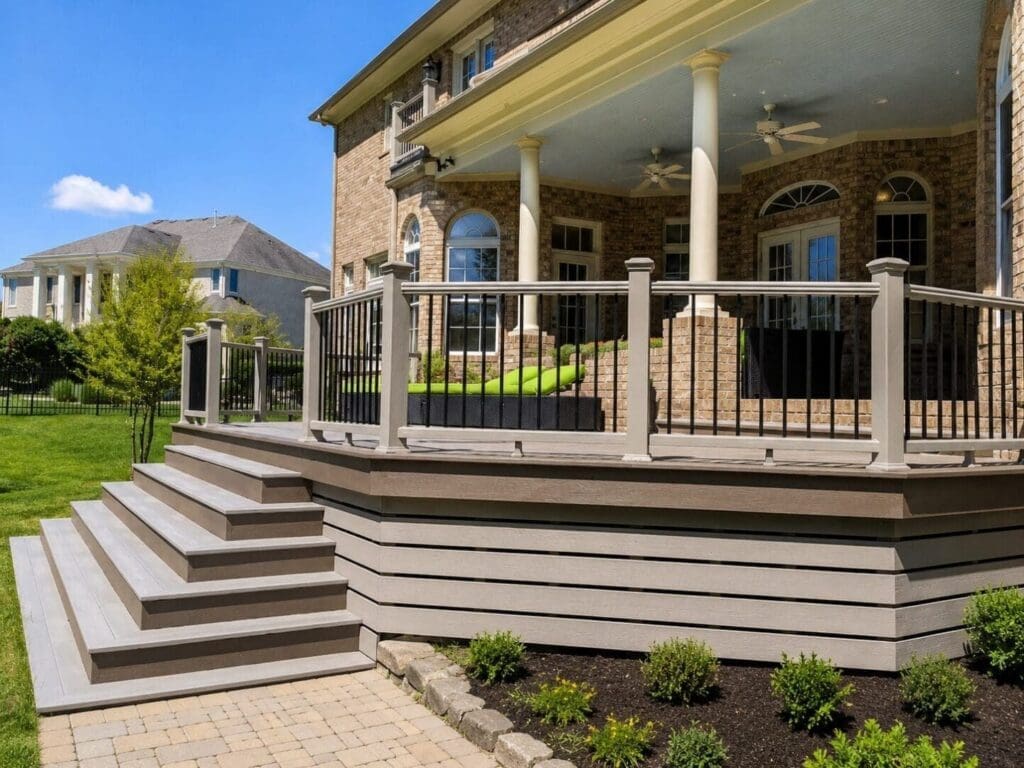
Here is my honest recommendation after 25 years. If your top priority is the lowest possible upfront price and you genuinely enjoy maintaining your deck, pressure-treated wood can be the right call, especially on a covered or inland deck away from salt air. For nearly everyone else, and especially for waterfront and salt-exposed homes, capped composite or PVC is the better long-term value. You pay more once, then you stop paying in time and maintenance for the next two to three decades. If you are weighing brands, our custom composite deck builder page shows what we can do, and as your composite deck builder in Hampton Roads we will walk your property and give you a straight answer for your specific situation. Want to see real projects first? Browse the project gallery.
Estimate Your Deck Cost
See the difference between wood and composite for your exact deck size in about a minute.
Frequently Asked Questions
Is composite decking better than wood?
For most Hampton Roads homeowners, yes. Composite resists the rot, warping, splintering and insect damage that our humidity and salt air drive in wood. It costs more up front, but it typically lasts 25 to 30+ years with almost no maintenance, while a wood deck here usually needs refinishing every year or two and replacement in 10 to 15 years. Wood still wins on lowest upfront price and a natural look some homeowners prefer.
How long does a composite deck last compared to wood?
A quality composite deck (Trex, TimberTech, Wolf) lasts about 25 to 30 years or more, and most carry 25-year or limited lifetime material warranties. Pressure-treated wood in our coastal climate generally lasts 10 to 15 years before boards need replacing, and only if it is sealed regularly.
What are the pros and cons of composite decking?
Pros: no staining or sealing, no splinters, fade- and stain-resistant, holds up to salt air and humidity, long warranties, and consistent color. Cons: higher upfront cost, darker boards get hot in direct summer sun, and it cannot be sanded or refinished like wood. Good board selection and layout solve most of the heat concern.
Composite vs pressure-treated wood, which should I choose?
Choose pressure-treated wood if your priority is the lowest upfront cost and you do not mind annual upkeep. Choose composite if you want to spend your weekends using the deck instead of maintaining it and you plan to stay in the home. Over a 25-year horizon the maintenance and replacement costs of wood often erase its upfront savings.
How much does a composite deck cost compared to wood?
In Hampton Roads, pressure-treated wood runs roughly $15 to $30 per square foot installed, composite about $30 to $55, and PVC about $40 to $70. Wood is cheapest to build but most expensive to own once you add staining and eventual replacement. Use our deck cost calculator for a number on your specific deck.
What is the best decking for Virginia coastal and waterfront homes?
For waterfront and salt-exposed homes in Virginia Beach, Norfolk and the Eastern Shore side of Hampton Roads, we usually recommend capped composite or PVC with stainless or coated structural hardware. These materials shrug off salt spray and humidity that destroy wood and corrode cheap fasteners.
Does composite decking get too hot in Virginia summers?
Darker composite boards can get noticeably warm in direct afternoon sun, just like a dark car. Lighter colors, good airflow under the deck, and shade structures keep it comfortable. We help you pick colors and layouts that stay cooler.
Do you warranty the decks you build?
Yes. B&B Decks backs only new composite deck builds with a 5-year labor and materials warranty, on top of the extended manufacturer material warranties from Trex, TimberTech and Wolf. We are a licensed Virginia Class A contractor (#2705198652), veteran- and family-owned.